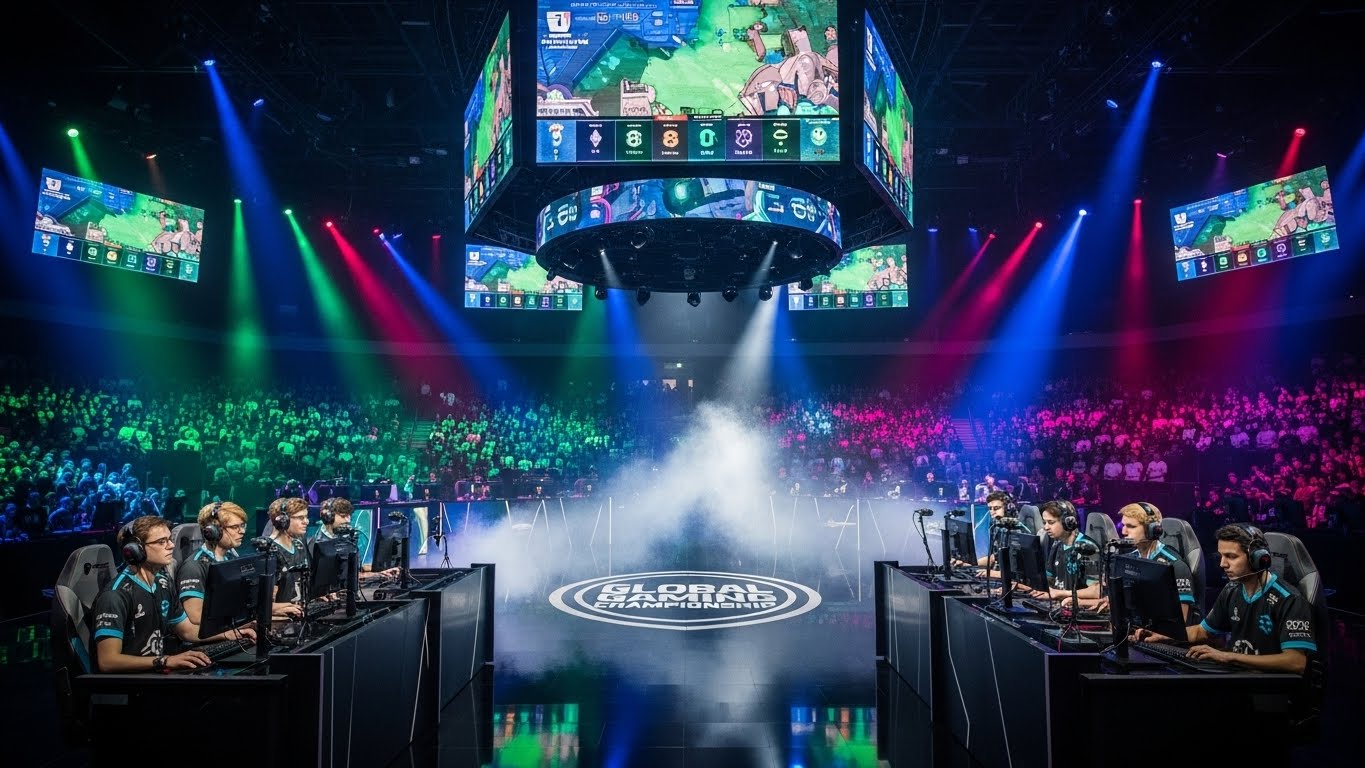

Esports has evolved rapidly over the past decade, transforming from niche gaming competitions into global phenomena attracting millions of viewers. As the industry continues to grow, technology plays a crucial role in shaping the experience for players, organizers, and audiences alike. Among the technological innovations influencing esports, Augmented Reality (AR) has emerged as a key player. AR is redefining how esports events are experienced, enhancing gameplay visualization, audience engagement, and the overall entertainment value. This article explores the multifaceted role of AR in esports events and how it is changing the competitive gaming landscape.
Understanding Augmented Reality in Esports
Augmented Reality, or AR, refers to the integration of digital elements into the real-world environment. Unlike Virtual Reality, which immerses users in a fully digital environment, AR overlays interactive graphics, statistics, and visual effects on real-world spaces. In the context of esports, AR can enhance live events, broadcasts, and even in-game experiences by providing real-time information, 3D graphics, and immersive visualizations.
The core purpose of AR in esports is to create a more engaging and informative experience for both viewers and players. By bringing digital elements into the real world, AR bridges the gap between traditional sports broadcasting and interactive gaming entertainment.
AR Enhancing Audience Engagement
One of the most significant impacts of AR in esports is its ability to boost audience engagement. Traditional esports events often rely on in-game screens and player perspectives to showcase the action. While this provides a close-up view of gameplay, it can be difficult for casual viewers to fully understand strategies, player positions, and critical game moments.
With AR, broadcasters can overlay detailed graphics and real-time statistics onto live footage. For instance, AR can display player health bars, cooldown timers, and movement paths in real-time, giving viewers a deeper understanding of the game. This technology transforms passive viewers into active participants, as they can follow the strategies and decision-making processes of professional players.
AR can also enable interactive features for fans attending live events. By using AR-enabled devices or applications, attendees can point their smartphones or tablets at the stage to access additional information about players, teams, or in-game events. This interaction enhances the sense of immersion and allows fans to connect with the esports experience on a more personal level.
Transforming Live Event Production
Esports event production has become increasingly sophisticated, requiring advanced technology to deliver a polished broadcast experience. AR plays a vital role in transforming how live events are presented, making them visually captivating and easier to follow.
For example, AR can be used to project virtual elements directly onto the stage or arena floor. During a match, AR visuals can indicate team territories, key objectives, or dynamic in-game effects, making the action more understandable for audiences. These visualizations not only enhance viewer comprehension but also add a cinematic quality to live esports broadcasts.
Moreover, AR allows production teams to experiment with innovative camera angles and perspectives. Virtual cameras can move through digital overlays and interact with real-world elements, creating unique visual storytelling opportunities that traditional broadcasting cannot achieve. This approach elevates esports events to the same level of spectacle as professional sports while maintaining the interactivity that gaming fans expect.
Improving Player Performance and Training
AR is not only valuable for spectators but also has applications for professional players. In training and practice environments, AR can provide real-time feedback and data overlays that help players analyze their performance. Coaches can use AR to visualize player positioning, reaction times, and tactical decisions, creating a more immersive and informative training experience.
For example, in a first-person shooter (FPS) game, AR can simulate enemy movements or objectives within the practice arena. Players can visualize attack routes, defensive positions, or optimal strategies in a real-world space, enhancing their spatial awareness and decision-making skills. This level of interactivity is particularly beneficial in team-based games, where communication and coordination are critical to success.
AR can also assist in mental training by providing simulations of high-pressure scenarios. Players can rehearse clutch moments or complex strategies in an augmented environment, allowing them to develop reflexes and adaptability that translate directly to live competitions.
AR-Driven In-Game Enhancements
In addition to live event production and training, AR is beginning to influence the in-game experience itself. Some esports titles are experimenting with AR overlays that provide players with additional information without disrupting gameplay. These overlays can display objective timers, map indicators, or team statistics in a subtle, context-sensitive manner.
AR can also be used to create new modes and experiences within games. For instance, tournament organizers may introduce AR-enhanced spectator modes where viewers can access multiple camera angles, player stats, and interactive visualizations simultaneously. This kind of innovation blurs the line between playing and watching esports, creating a more immersive ecosystem for fans and participants.
Marketing and Sponsorship Opportunities
Augmented Reality also opens new avenues for marketing and sponsorship in esports events. Brands can leverage AR to create interactive advertisements that blend seamlessly with live broadcasts or in-arena experiences. Unlike traditional advertising, AR enables dynamic and engaging content that resonates with gaming audiences.
For example, sponsors can create AR-powered experiences that allow fans to interact with branded digital objects, participate in challenges, or access exclusive content during matches. This level of engagement not only increases brand visibility but also fosters positive associations with the esports community. AR transforms marketing from a static presence into an interactive, memorable experience that enhances the overall event atmosphere.
Challenges and Limitations of AR in Esports
Despite its transformative potential, integrating AR into esports is not without challenges. Technical limitations, such as latency, hardware compatibility, and real-time rendering, can impact the effectiveness of AR applications. High-quality AR experiences require powerful computing systems and precise synchronization with live gameplay, which can be resource-intensive.
Additionally, AR implementation must balance visual appeal with usability. Overly complex or cluttered AR visuals can distract viewers or players, reducing engagement rather than enhancing it. Ensuring a seamless integration of AR elements into both broadcasts and live events requires careful planning, design, and testing.
Another challenge is accessibility. Not all fans have access to AR-enabled devices or software, which can create disparities in the viewing experience. Esports organizers must consider how to provide inclusive AR experiences that cater to diverse audiences while maintaining technological innovation.
The Future of AR in Esports
The potential for AR in esports is vast, and the technology is expected to evolve rapidly in the coming years. As AR hardware becomes more affordable and software more sophisticated, its integration into esports events will become increasingly seamless.
We can expect future esports events to feature fully immersive AR experiences, where fans can explore 3D arenas, follow players in real-time from multiple perspectives, and interact with virtual elements alongside live action. AR could also enhance remote viewing experiences, enabling fans to participate virtually in events with interactive overlays and real-time data visualization.
Furthermore, AR may drive innovation in game design itself. Developers could create games specifically optimized for AR-enhanced events, incorporating mechanics and features that leverage augmented environments. This convergence of game design, broadcasting, and AR technology has the potential to redefine the esports industry and create experiences that are more interactive, informative, and entertaining than ever before.
Conclusion
Augmented Reality is playing an increasingly pivotal role in esports events, transforming the way players, organizers, and audiences engage with competitive gaming. From enhancing live broadcasts and audience interaction to improving player training and opening new marketing opportunities, AR is reshaping the esports ecosystem.
As technology continues to advance, the integration of AR in esports will become more sophisticated, offering immersive and interactive experiences that blend the virtual and real worlds. The future of esports is not only about skill and strategy but also about the seamless fusion of gaming, technology, and entertainment. AR stands at the forefront of this transformation, promising to elevate esports events to unprecedented levels of engagement, excitement, and innovation.