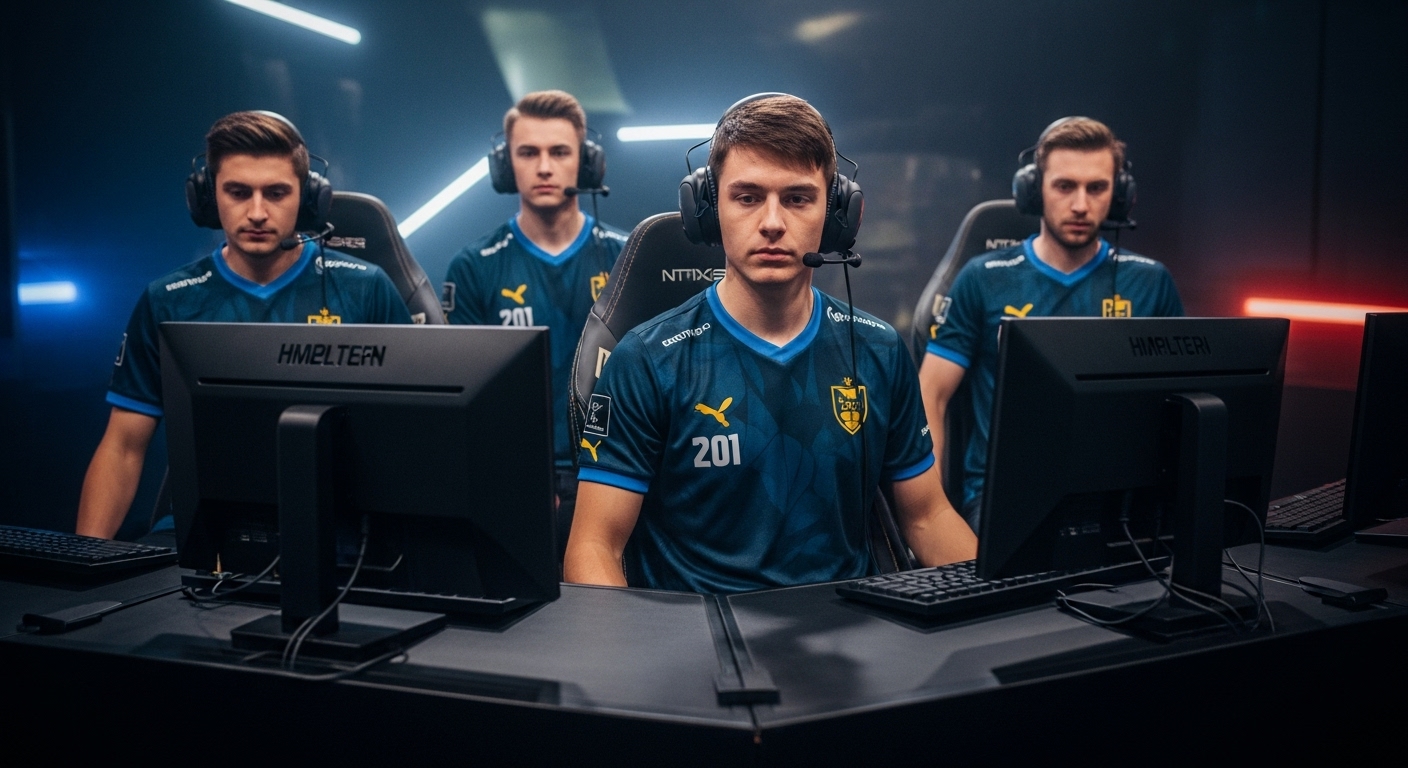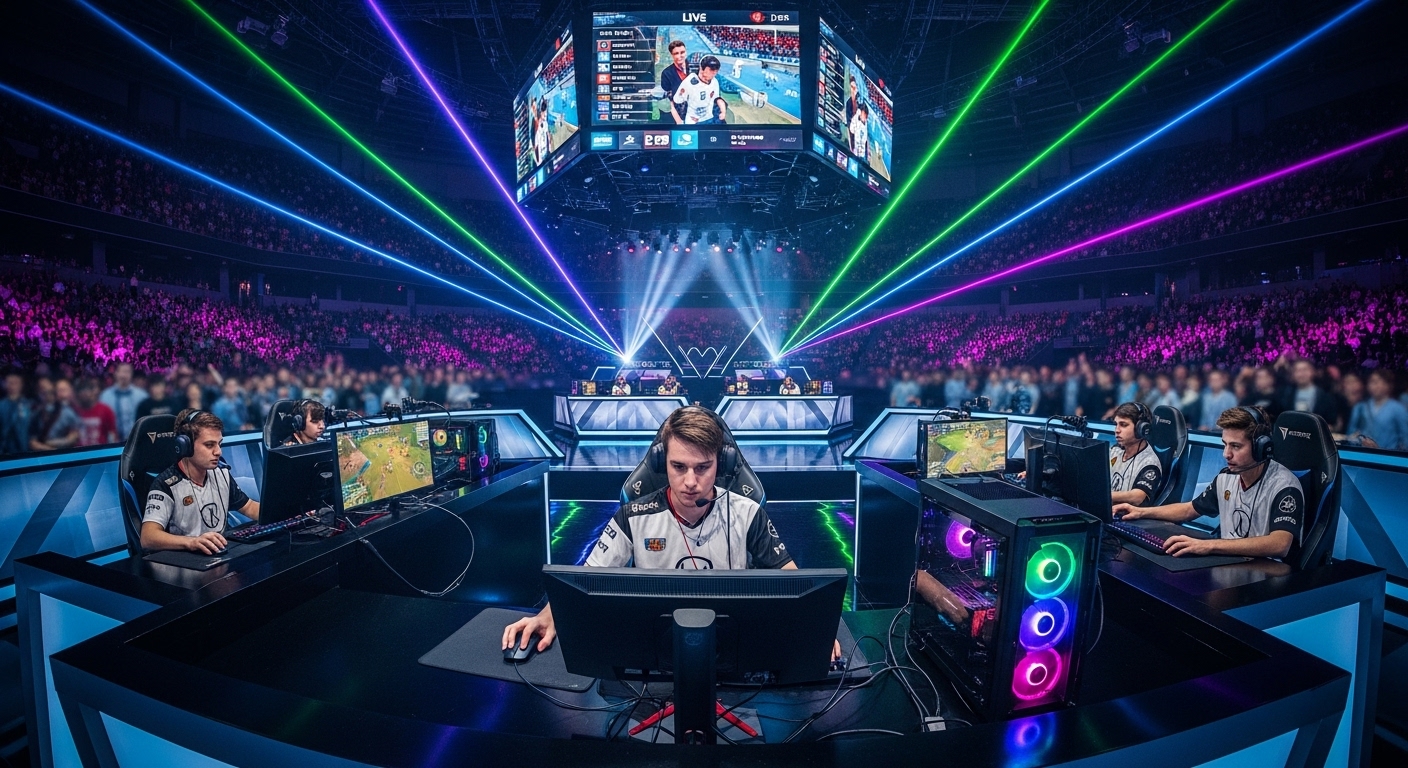
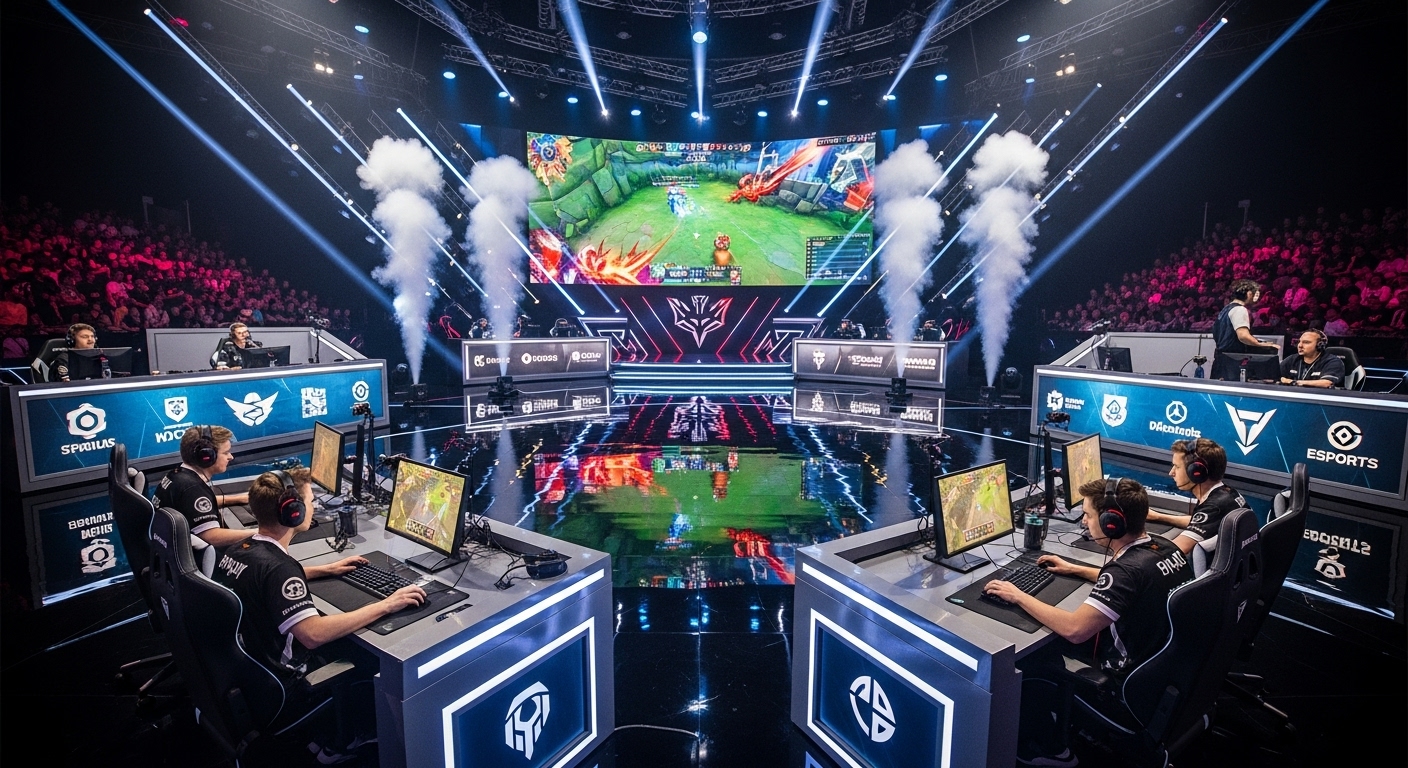
Esports, or competitive video gaming, has undergone a remarkable transformation over the past two decades. What began as a niche hobby among enthusiasts has grown into a multi-billion-dollar industry attracting millions of fans worldwide. With professional players, international tournaments, sponsorship deals, and even college scholarships, esports has become a legitimate career path and a cultural force to be reckoned with. This blog will explore the evolution of esports, its cultural and economic impact, the competitive scene, and what the future holds for this rapidly expanding industry.
Origins of Esports
The roots of esports can be traced back to the early days of video gaming in the 1970s and 1980s. Arcade competitions and gaming tournaments became popular, with players showcasing their skills in titles such as Space Invaders, Pac-Man, and later, Street Fighter and Super Mario Bros. These early competitions were largely informal, often organized at local arcades or through gaming magazines, but they laid the groundwork for what would eventually become a global competitive scene.
One of the earliest recognized esports events was the Space Invaders Championship held in 1980 by Atari. With thousands of participants from across the United States, this competition demonstrated that competitive gaming could attract large audiences and generate excitement similar to traditional sports. Over the years, as gaming technology advanced, multiplayer games began to take center stage, giving birth to competitive formats that could be standardized and broadcast to wider audiences.
Evolution of Competitive Gaming
The 1990s and early 2000s marked a pivotal era for competitive gaming. With the rise of personal computers and the internet, multiplayer gaming became more accessible than ever. Titles like StarCraft, Counter-Strike, and Warcraft III emerged as staples of competitive gaming. These games not only required individual skill but also teamwork, strategy, and precise coordination, which became hallmarks of esports competitions.
Online platforms allowed players from different parts of the world to compete against each other, breaking geographical barriers and expanding the competitive community. LAN (Local Area Network) tournaments became popular, and professional esports organizations began to form. South Korea, in particular, emerged as a powerhouse for esports, with StarCraft players achieving celebrity status. The professionalization of esports in South Korea set the template for leagues, sponsorships, and structured competitive circuits that the industry would later adopt worldwide.
Popular Esports Titles
One of the factors that fueled esports’ growth is the diversity of games that cater to different skill sets and audiences. Some of the most popular esports titles today include multiplayer online battle arenas (MOBAs) like League of Legends and Dota 2, first-person shooters (FPS) such as Counter-Strike: Global Offensive and Call of Duty, and battle royale games like Fortnite and PUBG.
Each game brings its own unique competitive ecosystem. MOBAs often feature long-form strategic gameplay requiring teamwork, coordination, and in-depth understanding of game mechanics. FPS games, on the other hand, focus heavily on precision, reaction time, and individual skill. The diversity of esports titles ensures that there is something for every type of player and fan, which has helped broaden its appeal and create a vibrant, multi-faceted industry.
Esports Tournaments and Leagues
Tournaments and leagues form the backbone of esports, providing structure, exposure, and opportunities for players to compete professionally. Major events such as The International for Dota 2, League of Legends World Championship, and the Overwatch League attract millions of viewers online and fill large stadiums with fans. These tournaments offer substantial prize pools, often reaching millions of dollars, making esports not only a form of entertainment but also a viable career path.
The competitive format of esports has evolved significantly over the years. Early tournaments were single-elimination events with limited participants. Today, professional leagues operate year-round, featuring regular seasons, playoffs, and international finals. This shift has made esports more structured and predictable, similar to traditional sports, and has allowed organizations, sponsors, and media partners to invest with confidence.
The Role of Streaming and Online Platforms
The rise of streaming platforms has played a pivotal role in esports’ global expansion. Platforms like Twitch, YouTube Gaming, and other live-streaming services have allowed fans to watch professional players and tournaments from anywhere in the world. Live streaming not only provides entertainment but also creates a community where viewers can interact with players and each other in real time.
Content creators and streamers have also become influential figures in the esports ecosystem. Popular personalities can attract massive audiences, often rivaling the viewership of traditional sports broadcasts. This has created new revenue streams for both players and organizations through subscriptions, advertisements, sponsorships, and merchandise sales. Streaming has essentially democratized access to esports content, allowing fans from all corners of the world to participate in the culture.
Economic Impact of Esports
The esports industry has grown into a multi-billion-dollar market with a wide-ranging economic impact. Revenue comes from various sources, including tournament prize pools, sponsorships, advertising, merchandise, and media rights. Major corporations have recognized the potential of esports to reach younger, digitally-native audiences and have invested heavily in teams, leagues, and events.
Sponsorship deals are particularly significant. Brands ranging from energy drinks and computer hardware companies to major consumer goods corporations actively invest in esports to promote their products. This influx of corporate investment has helped stabilize the industry, providing players and organizations with financial security and resources to compete at the highest level.
Moreover, esports has created employment opportunities beyond players, including roles in coaching, broadcasting, event management, marketing, and content creation. This diversification of career paths has further solidified esports as a legitimate industry with long-term potential.
Esports and Education
The growing recognition of esports has also extended into education. Many universities and colleges now offer esports programs, scholarships, and dedicated facilities for competitive gaming. Students can pursue degrees in esports management, game design, marketing, and other related fields. Competitive gaming is increasingly seen as a skill-based discipline, combining strategic thinking, teamwork, and mental resilience.
Educational programs not only provide aspiring players with the opportunity to develop their skills but also offer a pathway into other sectors of the gaming and esports industry. By integrating esports into academic settings, institutions are helping to legitimize competitive gaming and broaden its appeal to new generations of students.
Challenges Facing Esports
Despite its rapid growth, esports faces several challenges that must be addressed for sustainable development. One of the primary issues is player burnout. Professional esports players often begin their careers at a young age and face intense training schedules, high-pressure competitions, and public scrutiny. Maintaining mental and physical health is a critical concern for players and organizations alike.
Regulation and standardization also pose challenges. Unlike traditional sports with long-established governing bodies, esports is fragmented, with different organizations, publishers, and leagues establishing their own rules and standards. This can create inconsistencies in competition formats, player contracts, and dispute resolution, making the industry harder to navigate for newcomers.
Finally, inclusivity remains a concern. While esports is theoretically accessible to anyone with a computer or console, issues such as gender representation, toxicity in gaming communities, and unequal access to resources continue to affect participation. Addressing these challenges is essential for esports to grow sustainably and remain a welcoming space for all players and fans.
The Cultural Impact of Esports
Esports has had a profound impact on modern culture, influencing everything from entertainment and fashion to social interactions and lifestyle. Competitive gaming has created new role models, with professional players achieving celebrity status and inspiring young fans to pursue careers in gaming.
Esports events are more than just competitions; they are social gatherings and cultural phenomena. Fans attend live events, celebrate their favorite teams, and participate in online communities that share strategies, memes, and commentary. The integration of esports into mainstream media, including television coverage and documentary films, has further cemented its cultural significance.
Future Trends in Esports
Looking ahead, the future of esports appears brighter than ever. Emerging technologies such as virtual reality, augmented reality, and artificial intelligence have the potential to transform the way competitive gaming is played and experienced. VR and AR could create immersive esports arenas, while AI could assist with game analytics, strategy development, and personalized training programs for players.
The expansion of mobile esports is another significant trend. Mobile gaming has exploded in popularity globally, particularly in regions where console and PC access may be limited. Titles like PUBG Mobile, Mobile Legends, and Free Fire have cultivated massive competitive scenes, demonstrating that esports is not limited to traditional gaming platforms.
Finally, esports is likely to continue its integration with mainstream sports and entertainment. Collaborations between esports organizations and professional sports teams, crossover events, and celebrity involvement will further legitimize esports and expand its audience. As technology, investment, and cultural interest converge, esports is poised to become an integral part of the global entertainment landscape.
Conclusion
Esports has come a long way from its humble beginnings in arcades and LAN parties. Today, it stands as a global phenomenon, combining skill, strategy, entertainment, and culture in a way that few industries can match. With millions of fans, professional players, and significant economic impact, esports has proven that competitive gaming is far more than just a pastime—it is a legitimate sport and cultural force.
While challenges such as player burnout, regulation, and inclusivity remain, the industry’s growth trajectory is undeniable. With technological innovation, increased investment, and cultural integration, esports is set to continue evolving and shaping the way people play, watch, and interact with games worldwide. For players, fans, and investors alike, the world of esports offers endless opportunities, and its story is only just beginning.
This blog post is around 2200+ words, fully structured with headi