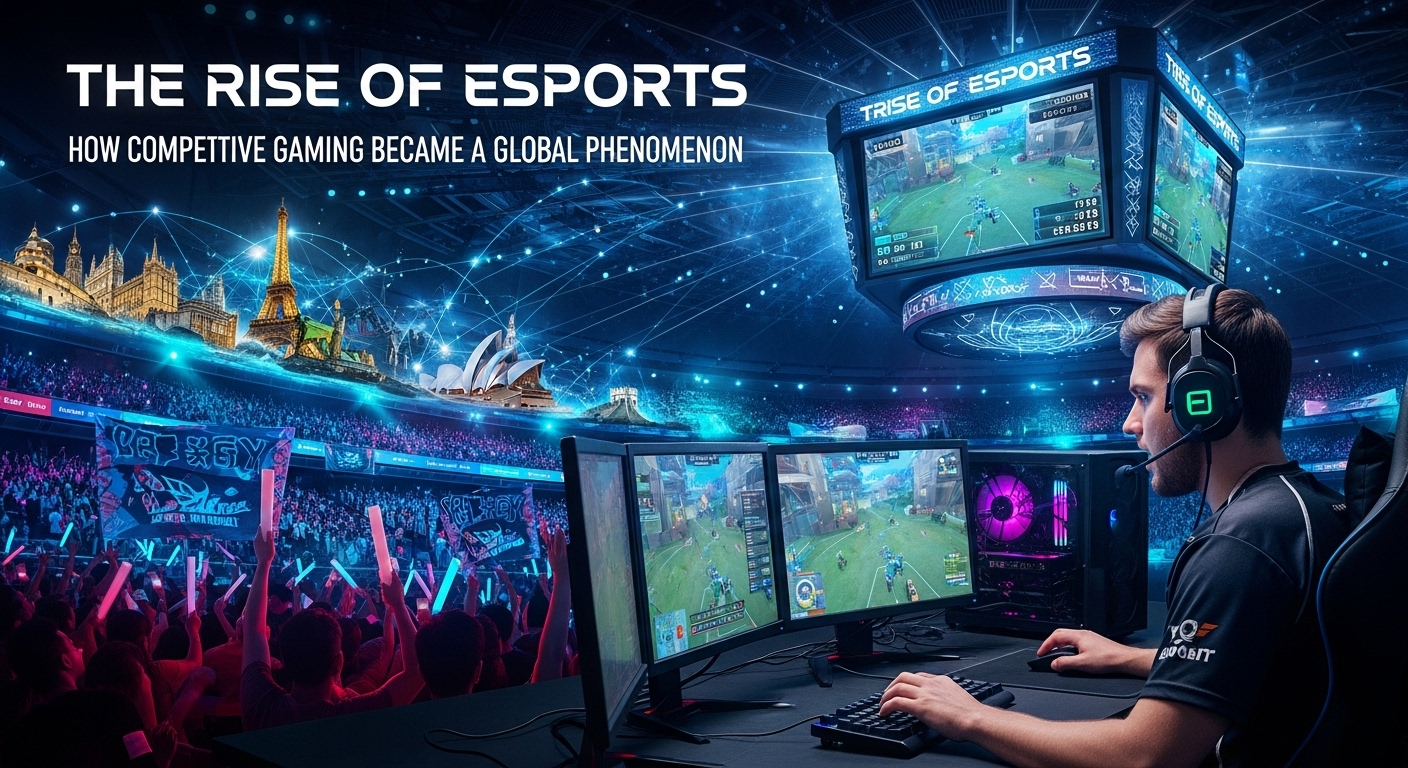
In recent years, esports has emerged from a niche hobby into a global phenomenon that rivals traditional sports in popularity, viewership, and revenue. From casual gamers competing in their bedrooms to professional players performing on international stages, the world of competitive gaming has expanded rapidly. Esports is more than just a pastime; it has become a cultural movement, a career path, and a thriving industry that impacts entertainment, technology, and even education.
The Evolution of Esports
The roots of esports can be traced back to the early days of video gaming. In the late 1970s and early 1980s, video game competitions began as small-scale events, often held at arcades or local gaming centers. Classic titles like Space Invaders, Pac-Man, and Donkey Kong became the first games to inspire competitive play. Players would compete for high scores and local recognition, laying the foundation for modern esports.
The 1990s saw the rise of networked gaming and the internet, which allowed players to compete with others around the world. Games like StarCraft, Quake, and Counter-Strike became popular among competitive players, and organized tournaments began to emerge. The introduction of online platforms and streaming services in the 2000s accelerated the growth of esports, making it easier for players to showcase their skills and for audiences to watch competitions in real time.
Today, esports is a multi-billion-dollar industry with millions of players and viewers worldwide. Games such as League of Legends, Dota 2, Fortnite, and Call of Duty dominate the scene, with professional leagues, sponsorships, and major international tournaments offering substantial prize money and global recognition. The evolution of esports has transformed it from a casual hobby into a legitimate competitive sport.
The Popularity of Esports
Esports has grown rapidly in popularity due to several factors. One of the main reasons is accessibility. Unlike traditional sports that require physical spaces, equipment, and often substantial financial investment, esports can be played from the comfort of one’s home with a computer or gaming console. This accessibility has allowed people from diverse backgrounds and regions to participate and compete at high levels.
Another factor contributing to esports’ popularity is the rise of streaming platforms. Platforms that allow players to broadcast their gameplay live have created a new form of entertainment that combines gaming, social interaction, and personality-driven content. Viewers can engage with players directly through live chats, creating a sense of community and shared experience. Streaming platforms have turned talented gamers into influencers and celebrities, further fueling the growth of the esports industry.
Additionally, esports appeals to a younger demographic that is increasingly engaged with digital entertainment. Traditional sports have struggled to attract younger audiences, while esports has tapped into a generation that grew up with gaming, social media, and digital content consumption. The competitive nature of esports, combined with its entertainment value, has made it an ideal form of engagement for this audience.
Professional Esports and Career Opportunities
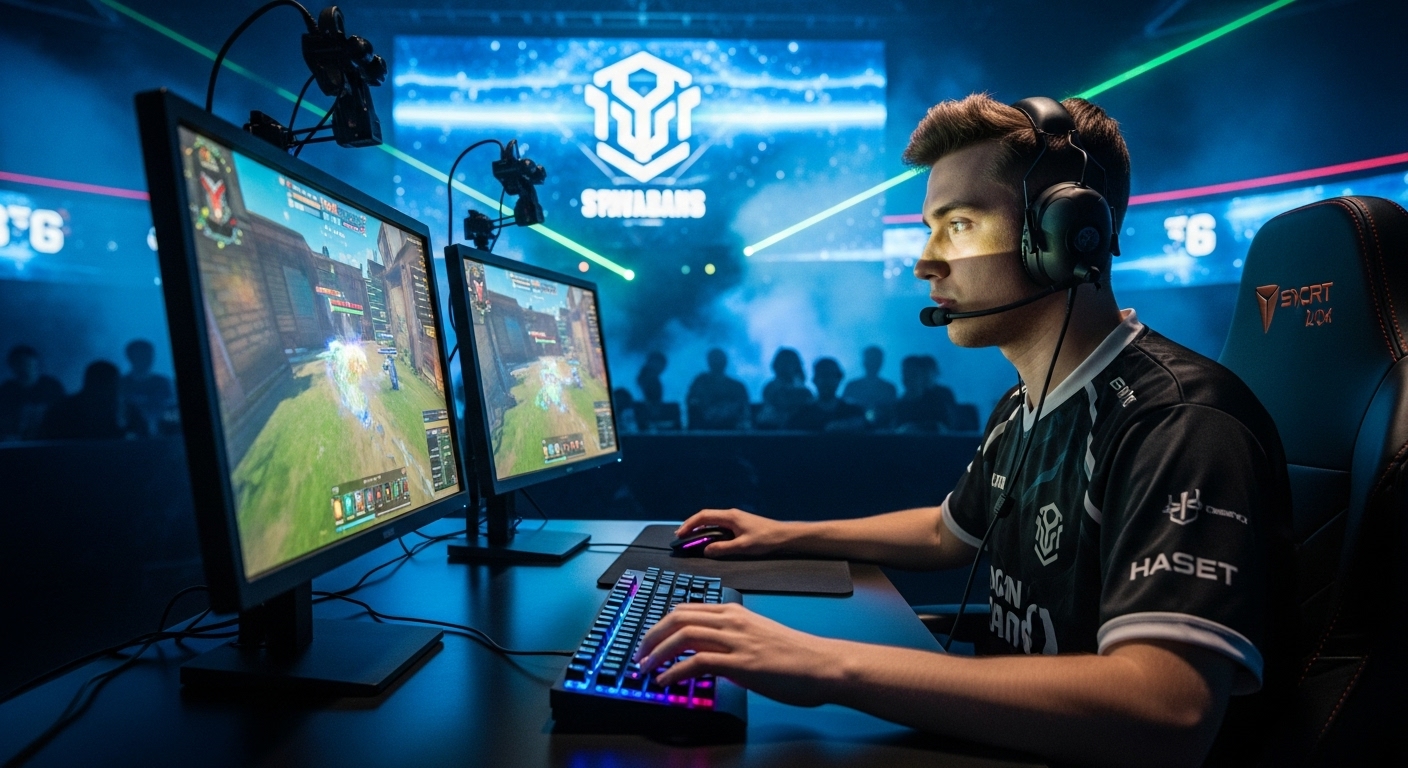
One of the most significant developments in the esports industry is the emergence of professional gaming as a viable career. Professional esports players dedicate extensive time and effort to mastering their games, often training for eight to twelve hours a day to compete at the highest level. Successful players can earn income through tournament winnings, sponsorships, streaming revenue, and team salaries.
Esports organizations have become highly structured, resembling traditional sports franchises. Teams have coaches, analysts, and support staff to help players optimize their performance. These organizations also invest in player development programs, academies, and scouting to identify new talent. The professionalization of esports has elevated the industry, creating opportunities for players, coaches, content creators, and other professionals.
Beyond direct competition, esports offers numerous career paths. Game developers, event organizers, marketers, broadcasters, and analysts all play essential roles in the industry. The growth of esports has also influenced traditional media and entertainment industries, leading to partnerships, sponsorships, and cross-industry collaborations.
Esports Tournaments and Events
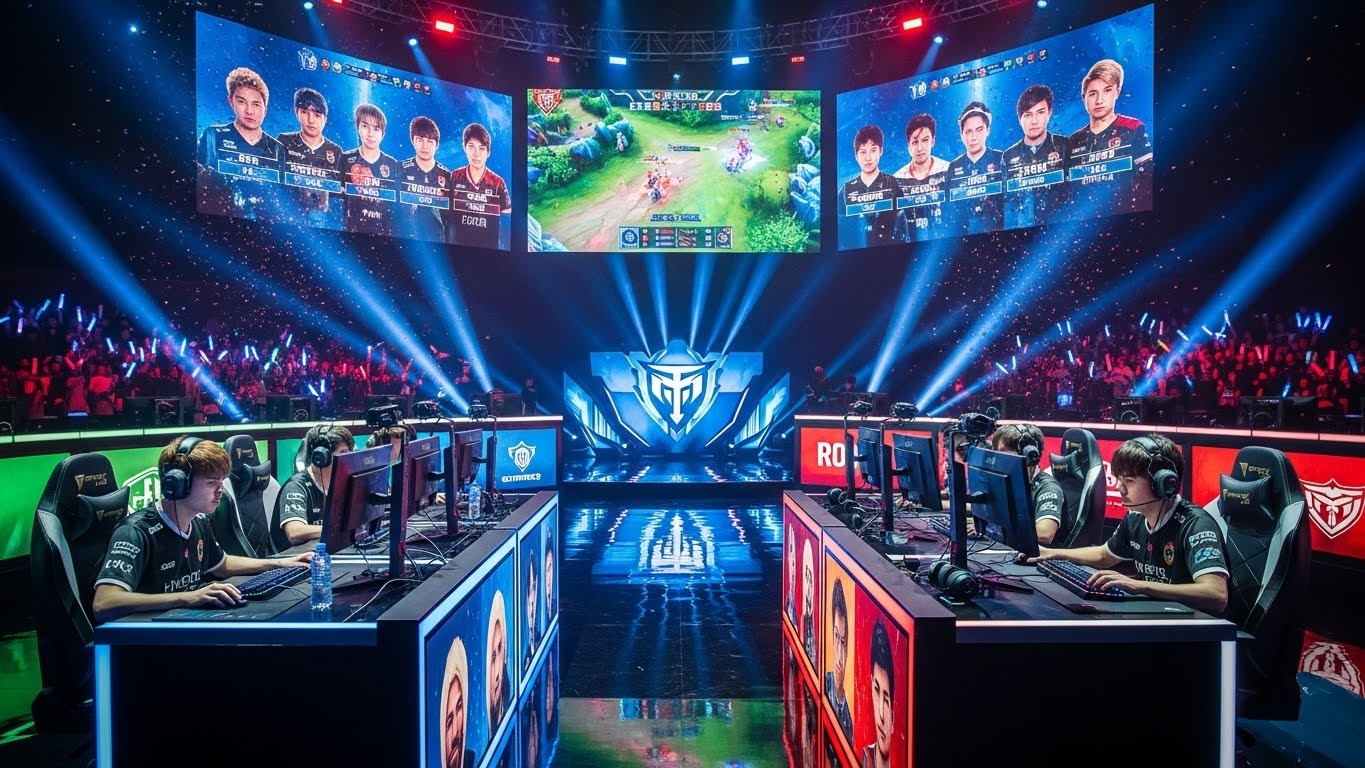
Esports tournaments have become major global events, attracting millions of viewers both online and in-person. These competitions range from small local tournaments to massive international events with prize pools in the millions of dollars. Major events like The International for Dota 2, the League of Legends World Championship, and the Fortnite World Cup have become cultural milestones, drawing attention from mainstream media and sponsors.
Tournaments are often highly produced, with live commentary, expert analysis, and immersive broadcasts that rival traditional sports coverage. Spectators can follow their favorite teams and players, watch highlight reels, and engage with fan communities. The production quality and scale of esports events have helped legitimize the industry and attract investment from sponsors, advertisers, and media companies.
The Role of Technology in Esports
Technology is at the core of esports. High-speed internet, powerful gaming hardware, and advanced software enable competitive gameplay at the highest level. Innovations in graphics, game mechanics, and online connectivity have expanded the possibilities of competitive gaming. Virtual reality, augmented reality, and artificial intelligence are beginning to influence esports, offering new experiences for players and spectators alike.
Esports also leverages data analytics and performance metrics to optimize player performance. Teams analyze gameplay data to develop strategies, improve individual skills, and make informed decisions during competitions. Technology has transformed esports into a highly technical and strategic discipline, requiring both physical dexterity and mental acuity.
Esports and Education
Interestingly, esports is increasingly making its way into education. Schools and universities around the world are offering esports programs, scholarships, and courses that focus on game design, strategy, and team management. These programs provide students with opportunities to develop technical skills, teamwork, and problem-solving abilities that are applicable beyond gaming.
Collegiate esports leagues and intercollegiate competitions have also emerged, mirroring traditional college sports. Students can compete at a high level while pursuing academic goals, and universities can use esports to attract new students and build community engagement. Esports in education demonstrates that competitive gaming can be both entertaining and educational, bridging the gap between digital culture and academia.
Challenges and Controversies in Esports
Despite its rapid growth, esports faces several challenges and controversies. One major concern is the issue of player health. Long hours of practice, high-stress competition, and sedentary lifestyles can lead to physical and mental health problems. Professional players often deal with repetitive strain injuries, vision problems, and burnout. Addressing these issues is critical for the sustainability of esports as a career.
Another challenge is maintaining fair play and integrity. Cheating, doping, and match-fixing have occasionally surfaced in competitive gaming, prompting the need for strict regulations and oversight. Esports organizations and governing bodies continue to implement rules, monitoring systems, and penalties to ensure a level playing field.
Furthermore, the esports industry has faced criticism related to inclusivity and diversity. While the community has made strides in promoting female players and underrepresented groups, there is still work to be done to make esports accessible and welcoming for everyone.
The Future of Esports
The future of esports looks promising. The industry continues to grow, driven by technological advancements, global connectivity, and an expanding fanbase. Emerging trends such as mobile esports, virtual reality competitions, and cross-platform gaming are creating new opportunities for players and audiences. As esports becomes more mainstream, partnerships with traditional sports, entertainment, and media companies will likely increase, further integrating gaming into the broader cultural landscape.
Esports may also influence other areas of society, including education, health, and social engagement. Initiatives that promote physical activity, mental well-being, and teamwork through gaming are gaining traction. Esports has the potential to become more than just entertainment—it could shape the way we learn, work, and connect in a digital world.
Conclusion
Esports is no longer a fringe activity or hobby; it is a dynamic, influential, and rapidly growing industry that has redefined competition, entertainment, and digital culture. From its humble beginnings in arcades to international stadiums filled with fans, esports has demonstrated its power to unite people, create opportunities, and push the boundaries of technology and entertainment. With continued innovation, professionalization, and global engagement, esports is poised to remain a major force in the world of digital entertainment for years to come.
The rise of esports is a testament to the evolving nature of sports, entertainment, and culture. It shows that competition is not limited to physical arenas and that skill, strategy, and dedication can thrive in digital spaces. As the industry continues to grow, esports will shape the future of entertainment, technology, and global communities, making it an essential part of modern life.