Introduction: The Birth of a New Era in Competition
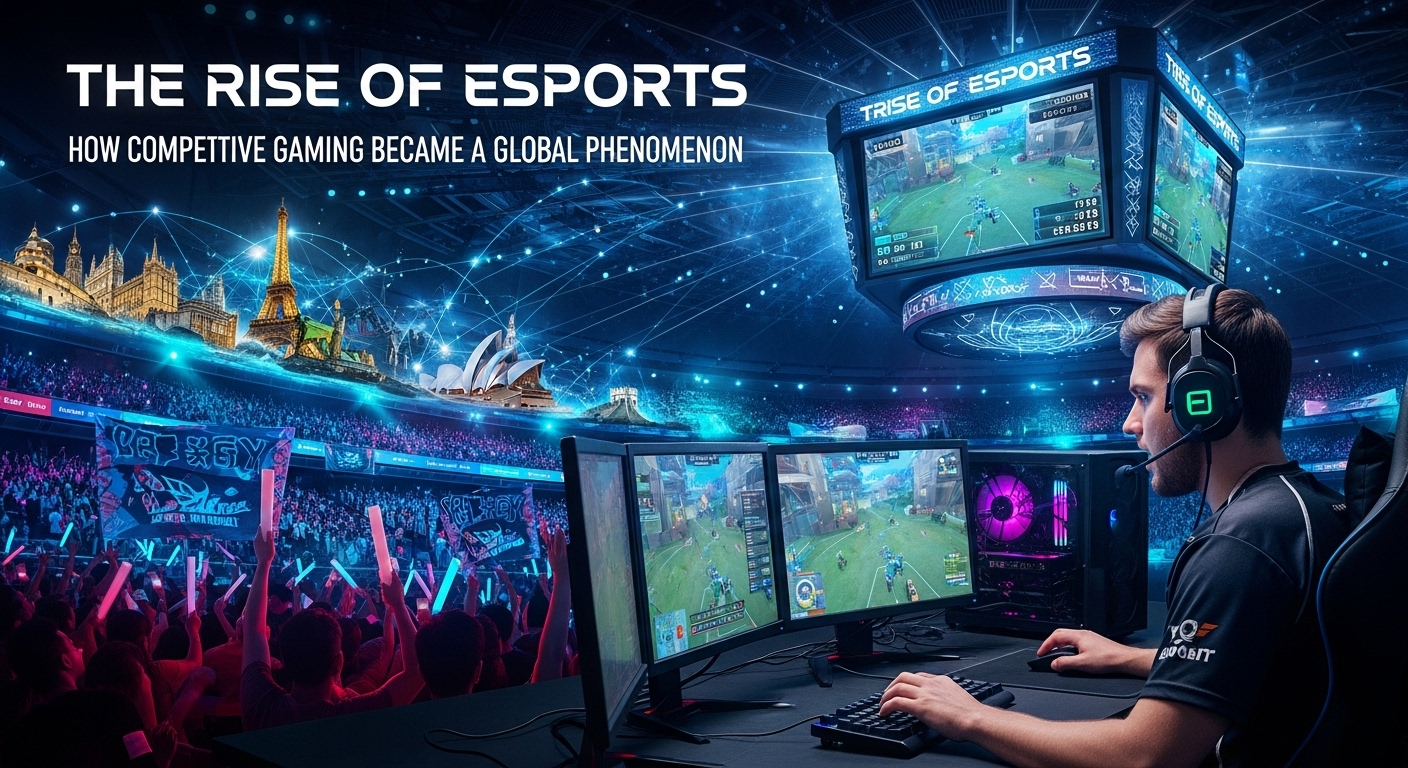
Esports, short for “electronic sports,” represents one of the most dramatic cultural and technological shifts of the 21st century. What began as a niche hobby for enthusiasts has evolved into a billion-dollar global industry, captivating audiences and players from every corner of the world. Unlike traditional sports, esports transcends geographical and physical boundaries, offering a level playing field where anyone with skill, strategy, and determination can rise to fame.
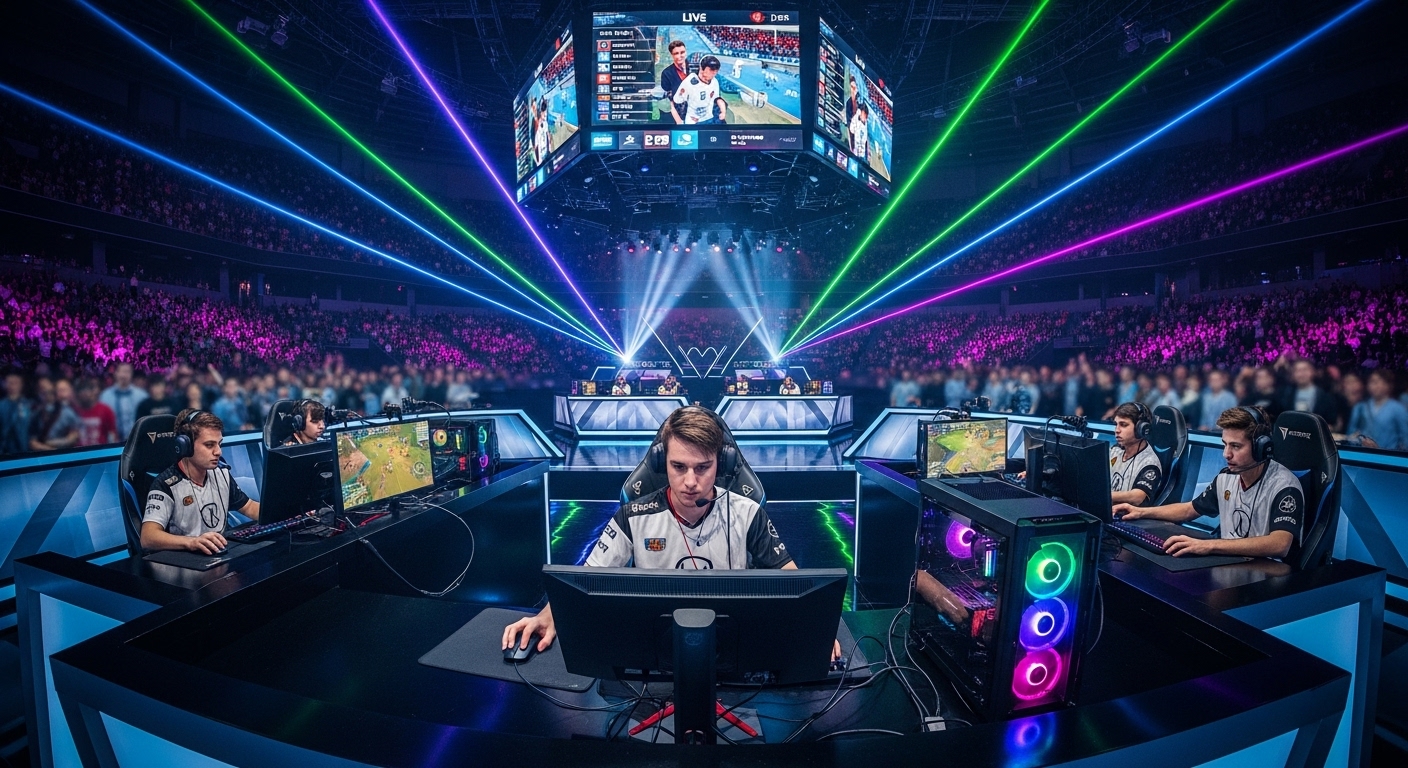
Over the past two decades, competitive gaming has transformed from casual arcade tournaments into massive international spectacles. Stadiums that once hosted concerts and football games are now filled with roaring fans cheering for their favorite teams and players who compete not with physical strength, but with mental agility, coordination, and digital mastery.
This is not just a story of games; it is a story of technology, culture, community, and the redefinition of what competition means in the digital age.
The Early Days: From Arcades to Local LAN Parties
The history of esports can be traced back to the 1970s and 1980s, when video games first began capturing public imagination. The earliest recorded competitive gaming event took place in 1972 at Stanford University, where students competed in “Spacewar!” for a year’s subscription to a magazine. Though modest by modern standards, it marked the birth of organized competitive gaming.
By the 1980s, arcades had become social hubs for gamers. Titles like Pac-Man, Donkey Kong, and Street Fighter ignited a competitive spirit among players who aimed for the highest scores on local leaderboards. Magazines and early television shows began celebrating top gamers, hinting at the cultural phenomenon that was to come.
The 1990s saw the rise of home gaming consoles and PC gaming, bringing competitive play into living rooms. LAN (Local Area Network) parties became a common scene, where players connected their computers to battle in games like Quake, Counter-Strike, and StarCraft. These grassroots competitions laid the foundation for organized esports tournaments, fostering tight-knit communities and a shared passion for mastery.
The 2000s: The Rise of Professional Esports
The early 2000s marked a turning point for competitive gaming. Internet access expanded rapidly, online multiplayer games flourished, and streaming technology began to emerge. Titles such as Warcraft III, StarCraft: Brood War, and Counter-Strike 1.6 became the centerpieces of the first global esports leagues.
South Korea played a particularly vital role during this period. The country’s investment in broadband infrastructure and gaming culture gave rise to a professional scene centered around StarCraft. Televised matches drew millions of viewers, and players became national celebrities. The term “esports” gained legitimacy here, setting an example for the rest of the world.
In the West, organizations such as Major League Gaming (MLG) and the Electronic Sports World Cup (ESWC) began hosting large-scale tournaments, offering substantial prize pools and sponsorships. Gaming was no longer just a pastime; it was becoming a career path.
Streaming and Social Media: The Game-Changing Decade
If the 2000s were about growth, the 2010s were about explosion. The rise of platforms like Twitch, YouTube Gaming, and later Facebook Gaming revolutionized how people consumed content. For the first time, fans could watch professional players live from anywhere in the world. This democratization of viewership expanded esports audiences beyond hardcore gamers to include casual viewers, influencers, and mainstream media.
Games such as League of Legends, Dota 2, and Counter-Strike: Global Offensive built dedicated competitive ecosystems. Riot Games’ League of Legends World Championship began filling entire arenas, while Valve’s The International set records for the largest prize pools in gaming history, funded through community contributions.
Meanwhile, Overwatch, Fortnite, and PUBG introduced team-based, visually engaging formats that appealed to younger audiences. Esports became a legitimate entertainment genre, competing with television, movies, and even traditional sports for viewers’ attention.
The Professionalization of Esports Organizations
As esports grew in popularity, so did its structure and professionalism. Teams transitioned from loosely organized groups of friends into fully developed franchises, complete with coaching staff, analysts, psychologists, and marketing departments. Organizations like Team Liquid, Cloud9, Fnatic, and T1 became recognizable global brands.
Sponsorships poured in from companies across industries — from technology giants to energy drink brands, and even car manufacturers. With this financial influx came the rise of player contracts, training facilities, and formalized leagues. Players began earning salaries, health benefits, and endorsement deals rivaling those of traditional athletes.
Governance also evolved. Leagues such as the Overwatch League and the League of Legends Championship Series introduced franchising models similar to those in the NBA or NFL, offering teams long-term stability and standardized competition. This helped attract mainstream investors, including sports franchises and celebrities, bridging the gap between esports and traditional athletics.
The Global Esports Scene: Cultures United Through Competition
Esports is perhaps the most globally unified form of competition in modern history. Players and teams from North America, Europe, Asia, and South America compete on equal footing, often transcending language and cultural barriers. Major events like The International, League of Legends Worlds, and Valorant Champions showcase global talent in front of millions of fans watching simultaneously across continents.
In countries like South Korea and China, esports has become a cornerstone of youth culture. Schools and universities now offer esports programs, and national tournaments receive government support. Meanwhile, Western nations are catching up fast, with North America and Europe fostering thriving collegiate esports programs and community leagues.
Latin America, the Middle East, and Africa are emerging as new frontiers for esports growth, driven by expanding internet access and a young, tech-savvy population. This global inclusivity makes esports not only a sport but a cultural bridge — a shared language spoken through skill and digital artistry.
Esports and Traditional Sports: Rivals or Partners?
As esports has grown, comparisons to traditional sports have become inevitable. Both share competitive structures, fan engagement, and professional training regimens. However, the key difference lies in accessibility and innovation. While physical sports are limited by geography and physical ability, esports can be played by virtually anyone, anywhere.
Interestingly, traditional sports organizations have begun embracing esports rather than resisting it. Football clubs like Paris Saint-Germain and Manchester City have established esports divisions. The NBA launched the NBA 2K League, blending real-world basketball with digital competition. Even the International Olympic Committee has explored integrating esports events, acknowledging its global influence among younger audiences.
This collaboration symbolizes a broader shift in how society defines athleticism and competition in the digital age.
The Role of Technology in Shaping Esports
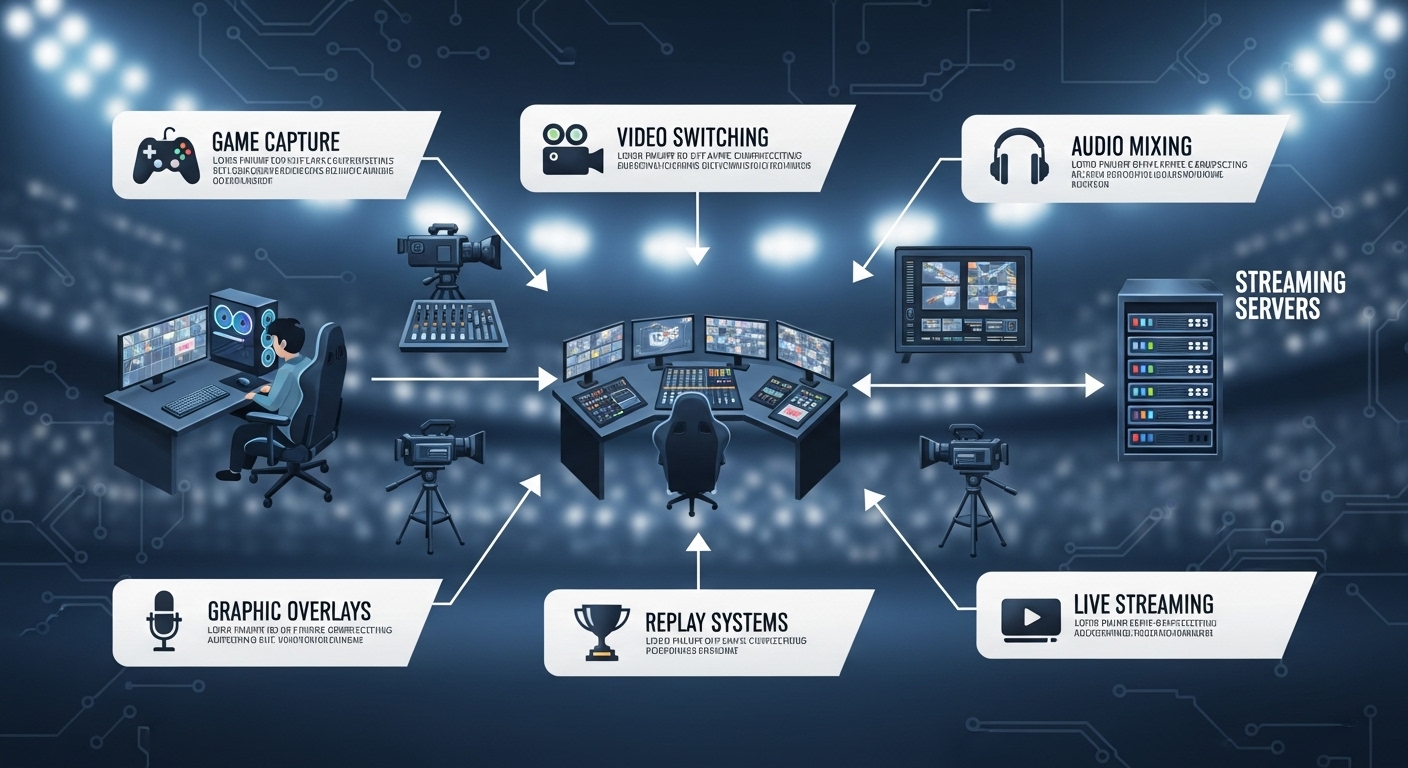
Technology is the heartbeat of esports. Advancements in computing power, internet speed, and streaming platforms have all contributed to its growth. High-performance gaming PCs, low-latency monitors, and specialized peripherals have optimized competitive play to milliseconds of precision.
Virtual reality (VR) and augmented reality (AR) are beginning to open new frontiers for immersive gaming experiences. Artificial intelligence (AI) assists in coaching and performance analytics, helping teams refine strategies with data-driven insights. Meanwhile, 5G networks promise to reduce lag and enhance accessibility for mobile esports — a rapidly growing segment in regions like Southeast Asia and India.
Esports thrives at the intersection of technology and creativity, constantly evolving alongside innovations that redefine how games are played and experienced.
The Psychological and Physical Demands of Esports
Contrary to popular belief, professional gamers endure intense physical and mental challenges. High-level esports demands exceptional reflexes, hand-eye coordination, and sustained focus. Players often practice for 8–12 hours a day, honing mechanics, communication, and teamwork.
Mental resilience is equally vital. Pressure, fatigue, and burnout are common in competitive environments where milliseconds determine victory or defeat. Many teams now employ sports psychologists and wellness coaches to help players maintain balance and mental health. Nutrition and physical fitness have also become integral to training regimens, recognizing that a healthy body supports a sharp mind.
Esports athletes are proving that gaming is not merely a sedentary hobby but a legitimate form of high-performance competition.
The Economic Impact of Esports
The esports industry’s economic footprint is staggering. Global revenues have surpassed the billion-dollar mark, driven by sponsorships, media rights, advertising, and merchandise. Prize pools for top tournaments often reach tens of millions of dollars, attracting players from around the world.
Beyond professional circuits, esports has created entire ecosystems of employment. Event organizers, casters, coaches, content creators, and marketing specialists all contribute to the industry’s growth. Streaming platforms generate additional revenue streams, enabling players and influencers to monetize their audiences directly.
Cities and countries are also recognizing esports as a driver of tourism and economic development. Large-scale events bring fans from across the world, filling hotels, restaurants, and entertainment venues. Governments in nations like China, South Korea, and Singapore have even designated esports as official industries, investing in infrastructure and educational programs.
Esports Education and Career Development
Esports is no longer seen solely as entertainment; it’s now a viable academic and career path. Universities around the world offer esports scholarships, degree programs, and research initiatives focusing on game design, marketing, and sports management. Students can learn not just how to play, but how to build and sustain the business behind it.
At the grassroots level, schools are integrating esports clubs to promote teamwork, leadership, and digital literacy. These programs prepare students for diverse careers in technology, broadcasting, psychology, and event management. The emphasis is shifting from “playing games” to understanding the multidisciplinary ecosystem that surrounds them.
This educational shift reflects a broader recognition of gaming as a legitimate cultural and professional domain.
Women in Esports: Breaking Barriers
For many years, esports faced criticism for gender imbalance and lack of representation. However, the landscape is slowly changing. Female gamers, streamers, and organizers are making significant strides, proving that talent knows no gender. Organizations are creating inclusive spaces and all-women leagues to empower diversity and challenge stereotypes.
Prominent female players and commentators are gaining visibility, inspiring younger generations to pursue careers in esports without fear of bias or exclusion. The conversation around inclusivity continues to grow, driving necessary cultural changes that will shape the industry’s future.
The Challenges Facing Esports
Despite its success, esports is not without obstacles. Issues such as player burnout, contractual disputes, doping allegations, and inconsistent regulations pose ongoing challenges. The industry’s rapid expansion has sometimes outpaced the development of ethical and legal frameworks.
Additionally, maintaining a sustainable economic model remains complex. Prize pools and sponsorships are lucrative for top-tier players, but many lower-tier professionals struggle to make a stable income. Ensuring fair pay, transparency, and long-term career development will be critical for esports to maintain credibility and balance.
Another concern is game longevity. Unlike traditional sports, video games can fade in popularity or be replaced by newer titles, forcing players and organizations to constantly adapt. Publishers hold significant control over competitive formats, which can create instability in the ecosystem.
The Future of Esports: A Digital Frontier Without Limits
The future of esports is filled with boundless potential. With virtual and augmented reality on the rise, players could soon find themselves competing in fully immersive arenas where physical and digital realities merge. Artificial intelligence could create personalized training programs, and blockchain technology might revolutionize ownership and transparency in tournaments.
Mobile gaming, in particular, is expected to drive the next wave of growth, especially in developing countries where smartphones are more accessible than PCs or consoles. Esports may also find new forms of integration with education, business, and even health sectors, as the skills developed through gaming — strategy, communication, and adaptability — become increasingly valuable in modern life.
Perhaps the most exciting prospect is the continued convergence of esports and mainstream culture. Movies, music, and fashion are already blending with gaming, creating a unified digital entertainment landscape where creativity knows no borders.
Conclusion: More Than a Game
Esports is not just about playing games — it is about passion, competition, and community. It has redefined what it means to be an athlete, what it means to be a fan, and what it means to connect in a globalized, digital world.
From the humble beginnings of arcade battles to multimillion-dollar global championships, esports has proven that human competition is evolving beyond the physical into the digital. It stands as a testament to how far technology, culture, and creativity can take us when combined with ambition and imagination.
As we look to the future, one thing is certain: esports is here to stay. It is not a trend, but a transformation — one that continues to inspire millions and reshape entertainment as we know it. The digital arena has become our new stadium, and in it, the world competes not just for victory, but for the celebration of human potential in every click, every play, and every triumph.